when you want, where you want.
Ship with a smile: How SendBack is giving life in the face of a graveyard for returns
Click “start return.” That’s where SendBack steps in.
The new-to-Kansas City startup built technology that catches a return the moment a shopper initiates it, explained founder Shaniqua Jones-Williams. Instead of automatically shipping it back to a warehouse, SendBack pauses the process and asks what actually makes sense — a refund, a discount to keep the item, a local donation or a closer reroute. The system weighs those options in real time, cutting down on waste and unnecessary shipping, she said.
Next month, her platform heads to a global stage. Jones-Williams is set to pitch SendBack at SXSW in Austin, Texas, as an alternate, stepping in front of a room filled with investors, founders and industry leaders.
At the center of SendBack is a pain point most people know too well, said Jones-Williams: the return graveyard. The unopened box in your trunk. The dress that didn’t fit. The gadget that felt essential in the moment and now sits past its return window.
“Consumers are losing $4.8 billion every year,” she said. “That’s real money, and it keeps climbing.”
A staircase conversation that changed everything
The idea began at home. After her 2022 wedding, Jones-Williams was surrounded by unopened packages. She had DIY’d much of the celebration, ordering extra sizes and backup decor to make sure everything came together. Months later, the boxes were still there.
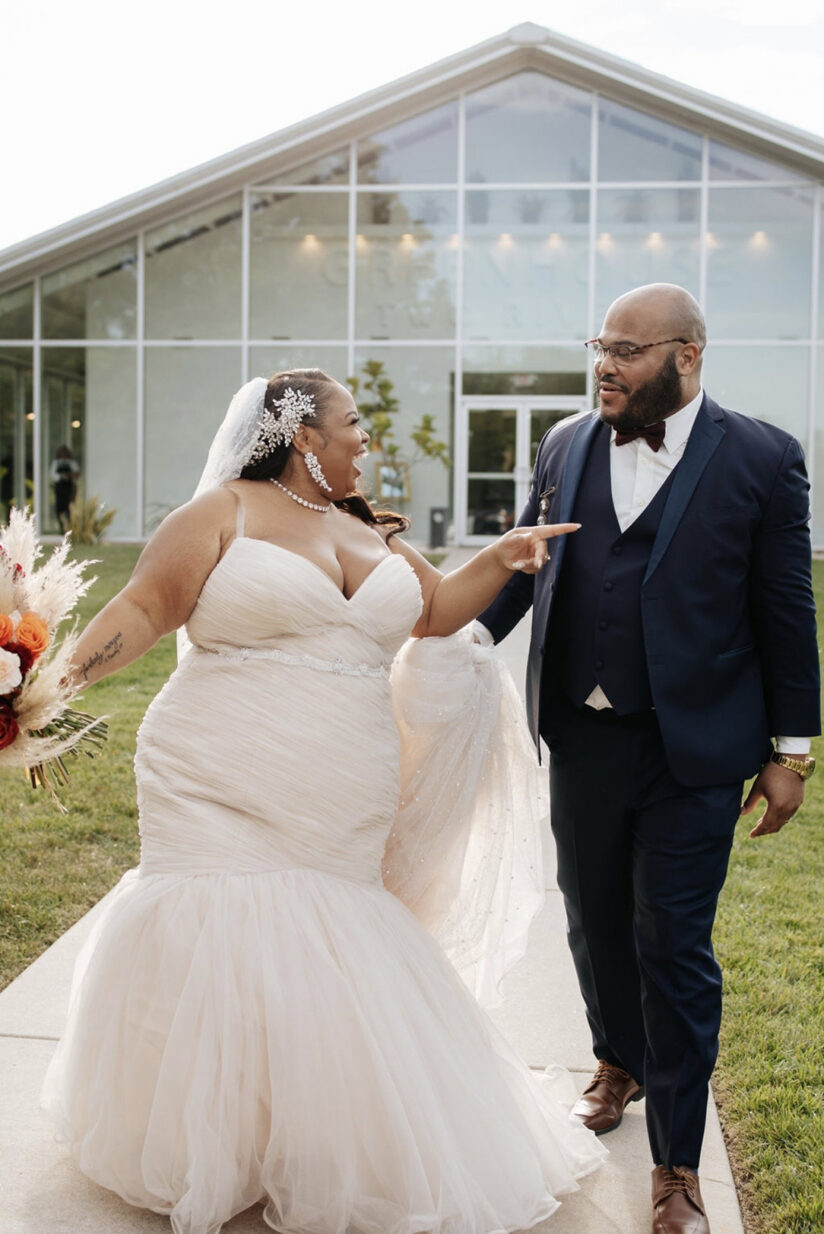
Shaniqua Jones-Williams and Larry Alan Williams on their wedding day in 2022; courtesy photo
“My husband came down the stairs, looked at everything and said, ‘Are you ever going to return this stuff?’” she recalled with a laugh. “I told him yes just to get him off my back. But honestly, I didn’t even know if I still could.”
He suggested a simple fix: what if there were a company that handled returns for you?
“That stuck with me,” Jones-Williams said. “I couldn’t stop thinking about it.”
She began researching that night and quickly saw the issue was much bigger than her living room. Holiday returns were overwhelming retailers, deadlines were missed, and logistics networks were strained by inefficiencies most shoppers never see.
From December to April, she immersed herself in the returns economy, mapping out where things were breaking down.
“It felt like I had struck gold,” Jones-Williams said. “Like this is what I’m supposed to be working on.”
She registered SendBack in April 2023 while still working in St. Louis, then made the leap to pursue it full time. A former executive mentor helped fund her early runway with consulting work and steady encouragement.
“She told me she would champion any woman building something for herself and her family,” Jones-Williams said. “That kind of belief changes you. It makes you think, ‘Maybe I really can do this.’”
Soon after, she delivered her first formal pitch, earning a $20,000 award.
“It was my first time ever pitching,” she said. “And I won.”
As the business gained traction, Jones-Williams found herself traveling frequently from St. Louis to Kansas City for accelerator programs and partner meetings.
“From mid-May to late July, I was on a plane every week,” she said. “I realized I needed to be fully planted somewhere. Kansas City has been transformative for this business.”
She officially relocated in late summer 2025.
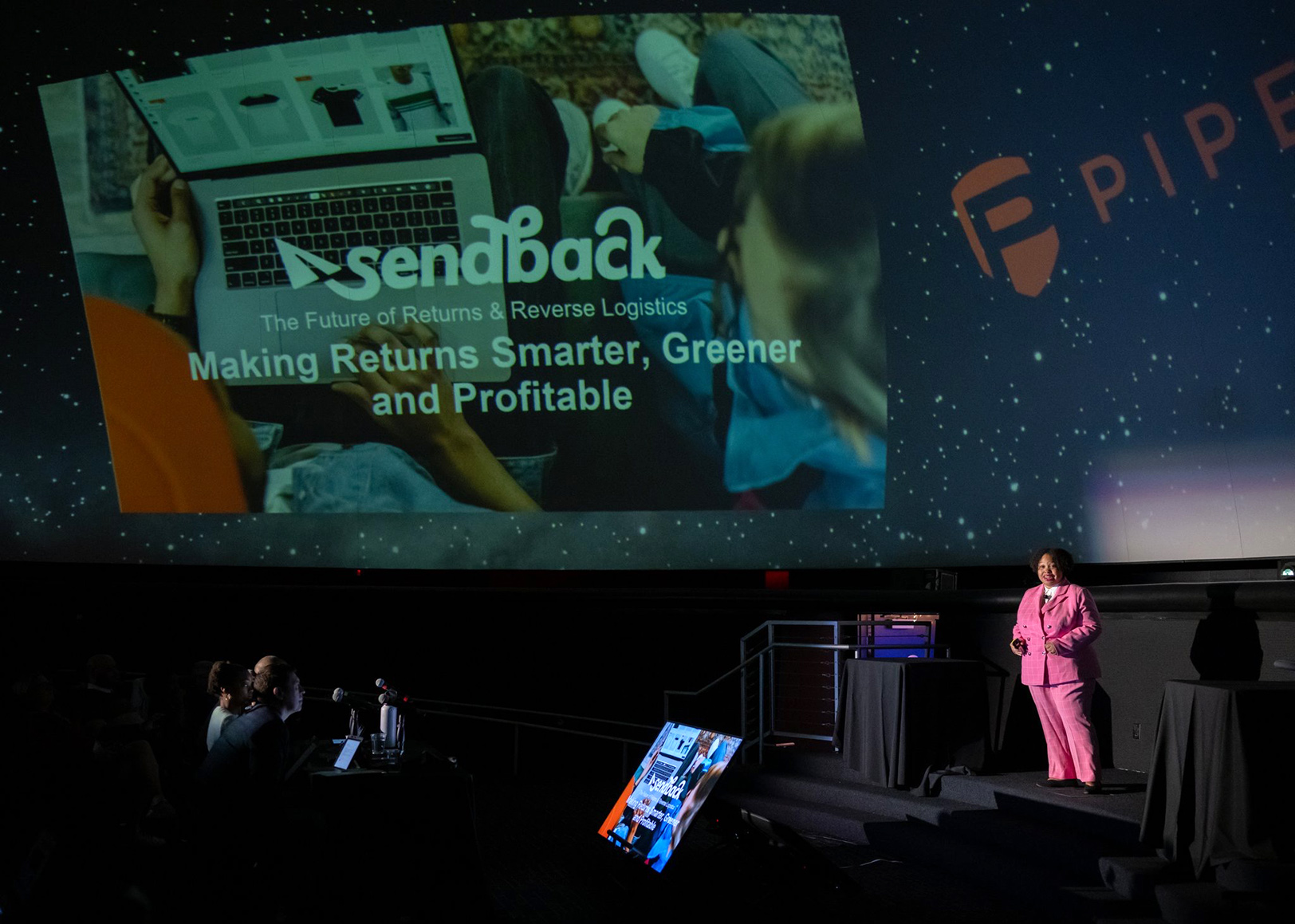
Shaniqua Jones-Williams pitches SendBack during a Pipeline showcase event in the Planetarium at Union Station; courtesy photo
A bigger problem upstream
SendBack started as a consumer-facing pickup service offering no-box, no-label returns at apartments, senior living communities and universities.
But through programs like Pipeline Entrepreneurs and funding support from Digital Sandbox KC, Jones-Williams began looking further upstream. The real breakdown wasn’t just at the doorstep. It was deeper in the supply chain.
“We intercept the return the moment it’s initiated and ask, what’s the smartest path forward?” she said. “Then we route it there.”
Instead of defaulting to cross-country shipping, SendBack’s technology evaluates alternatives in real time — whether the item can stay local, whether a partial refund solves the issue, or whether it can be donated instead of discarded.
“I realized that if I wanted to help consumers, I had to solve this for retailers and logistics partners first,” she said. “That’s where the inefficiency starts.”
Digital Sandbox funding is helping power that shift, Jones-Williams said. While the consumer app remains available to track purchases and deadlines, the company is now focused on building infrastructure for retailers and third-party logistics providers.
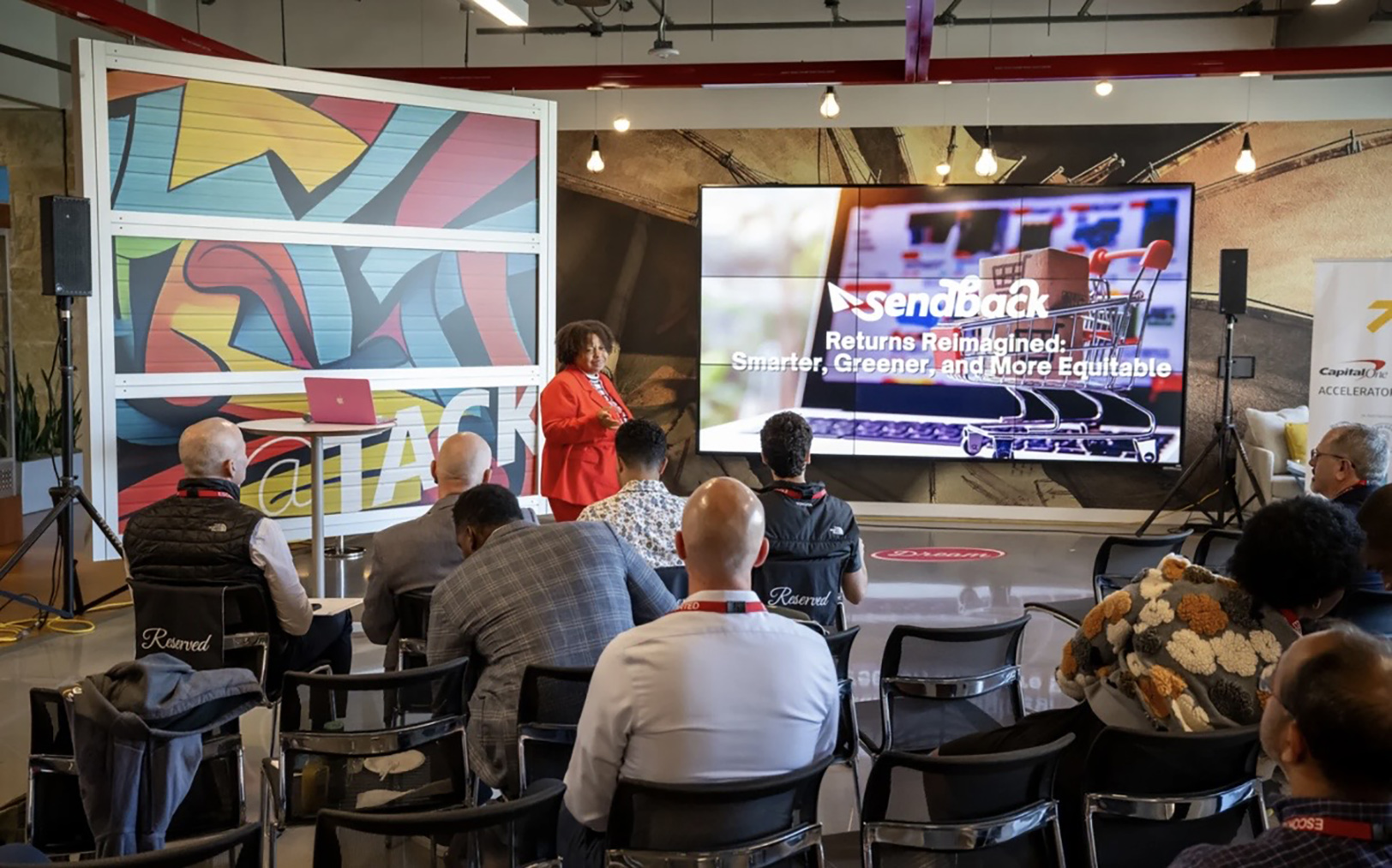
Shaniqua Jones-Williams, founder of SendBack, pitches during a Capital One accelerator demo day; courtesy photo
Honoring the foundation
Jones-Williams draws motivation from Black pioneers who shaped the logistics industry long before her, including Mary Fields, one of the first Black women to work for the U.S. Postal Service, and the women of the 6888th Central Postal Directory Battalion, who processed and delivered millions of pieces of mail during World War II.
“There were so many people who laid the groundwork for this industry,” she said. “I’m building on top of that.”
She remembers them especially on the hard days, Jones-Williams noted.
“They pushed through so I could run,” she said. “The least I can do is honor that and open the door for the next person.”
She sees SendBack as part of a larger story.
“This isn’t just about me,” Jones-Williams said. “I believe this was placed on my heart for a reason.”
More than anything, she wants to show with her upcoming pitch that returns don’t have to be a loss — that with the right system in place, they can be smarter, cheaper and far less wasteful for everyone involved.
“The future has a name, and it’s SendBack,” Jones-Williams said.
The post Ship with a smile: How SendBack is giving life in the face of a graveyard for returns appeared first on Startland News.